
9-BOX, IDP, AND PIP DEVELOPMENT PLANS
Help employees achieve short-term and long-term goals.
Turn performance reviews into strategic growth drivers. Our tools help you identify skill and performance gaps, align individual career goals with company objectives, and evaluate employee performance and potential with clarity, driving stronger results across your organization.
9-BOX Performance Review
The 9-Box review grid is a versatile and powerful tool that provides organizations with a comprehensive approach to evaluating, developing, and managing talent. 9-Box Review style is included with ReviewCloud, an all-in-one performance management system that provides flexible tools, structures, and processes to turn performance reviews into extraordinary performance.
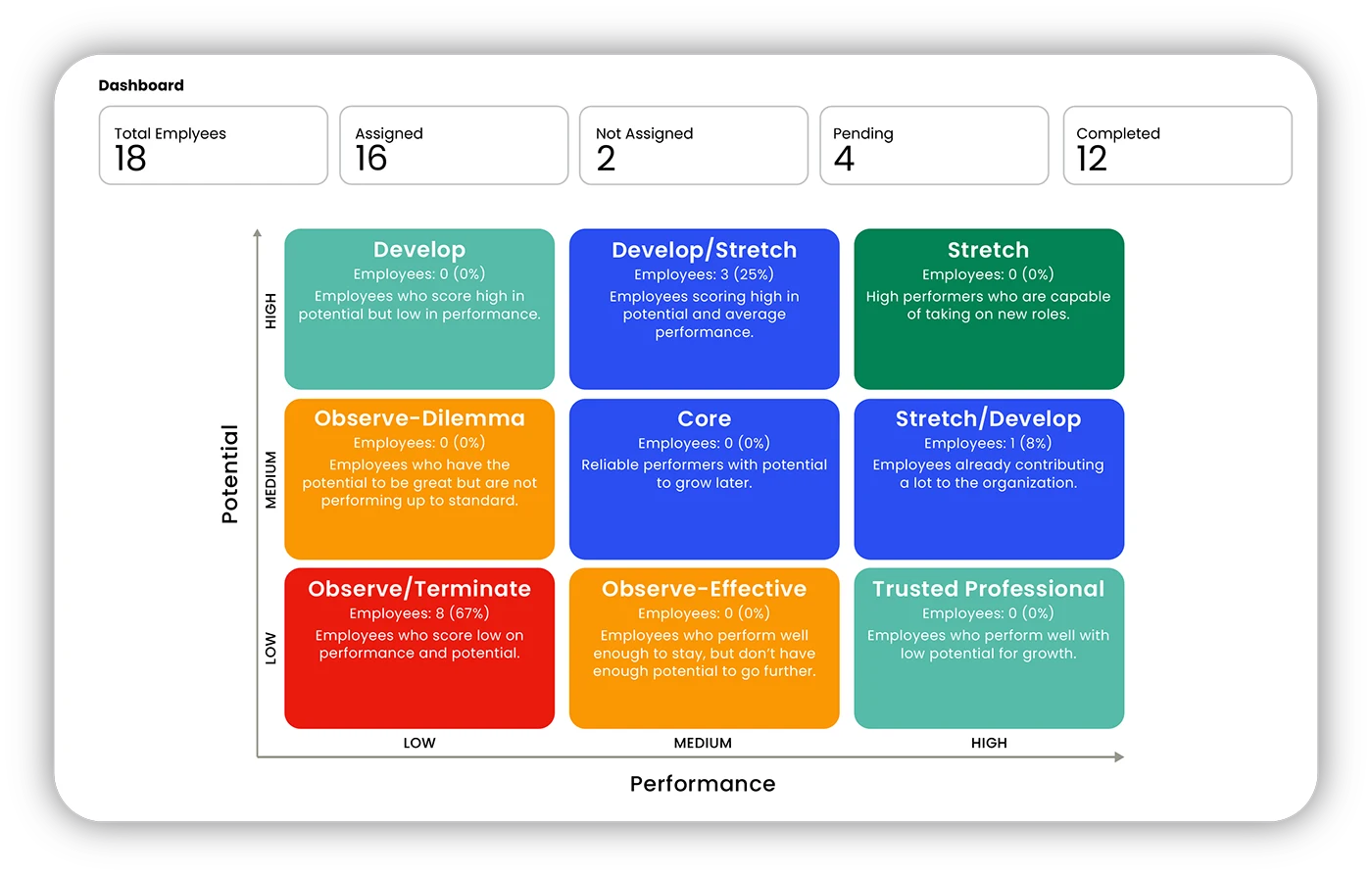
What is a 9-Box performance review?
The 9-box grid is a talent management tool widely used by managers to assess the performance versus potential of employees and to guide their plans for employee development and succession. On the x-axis is performance, measured by performance reviews; on the y-axis is potential.
Each box in the grid helps managers and HR professionals make informed decisions about employee development, succession planning, and resource allocation, ensuring that the organization is nurturing its top talent while addressing the needs of all employees.
9-box Grid Purpose and Benefits for:
- Clarity in Decision-Making: The 9-box grid provides a clear, visual representation of where each employee stands, helping managers make informed decisions regarding promotions, development plans, and succession planning.
- Identifying Talent Gaps: It helps in identifying gaps in the team where either performance or potential is lacking, guiding recruitment and training efforts.
- Focused Development Plans: Managers can tailor development plans according to the needs of each employee based on their placement in the grid.
- Balanced Teams: It aids in creating balanced teams with a mix of high performers and high-potential employees, ensuring both current success and future growth.
- Succession Planning: The 9-box grid is a valuable tool for identifying future leaders within a team, ensuring a robust succession plan is in place.
- Improved Collaboration: By understanding the strengths and weaknesses of team members, managers can foster better collaboration and assign tasks more effectively.
- Career Development: Employees gain a clearer understanding of how their performance and potential are perceived, helping them align their career goals with organizational expectations.
- Constructive Feedback: The 9-box grid facilitates structured feedback, allowing employees to understand where they excel and where they need improvement.
- Motivation: For those placed in higher boxes, it can be a motivating factor, while those in lower boxes can receive targeted support to improve.
Talent Management
- Helps organizations identify high-potential employees for leadership development programs or succession planning.
- Helps identify high-potential employees who can be groomed for leadership roles, ensuring a robust pipeline of future leaders.
- Aids in creating tailored development plans by identifying employees who could benefit from training, mentoring, or new challenges based on their position on the grid.
Employee Development
- Provides clear insights into where employees stand, allowing for more targeted development initiatives.
- Employees receive clear, structured feedback based on their placement in the grid, which can enhance engagement by making career paths and development needs more transparent.
- For high performers, being recognized as top talent or a rising star can be motivating, while those in lower boxes receive actionable insights to improve.
Strategic Alignment
- Supports managers in making informed decisions about promotions, role changes, and other career development opportunities.
- Allows managers to make more informed decisions regarding promotions, as it highlights both performance and potential.
- Helps in the effective allocation of resources, such as assigning development opportunities to those who will benefit the most or reallocating underperforming employees to more suitable
Individual Development Plan (IDP)
An Individual Development Plan (IDP) is a powerful tool designed to help employees define career goals and map out the steps necessary to achieve them. An Individual Development Plan is more than just a career tool—it’s a strategic advantage for both employees and organizations. It promotes growth, boosts performance, and creates a culture where continuous learning and improvement are the norms. By keeping performance metrics in check and actively supporting employee development, organizations set the stage for long-term success. Leverage IDP metrics from performance reviews, feedback loops, and even real-time data from ReviewCloud’s performance management tools.
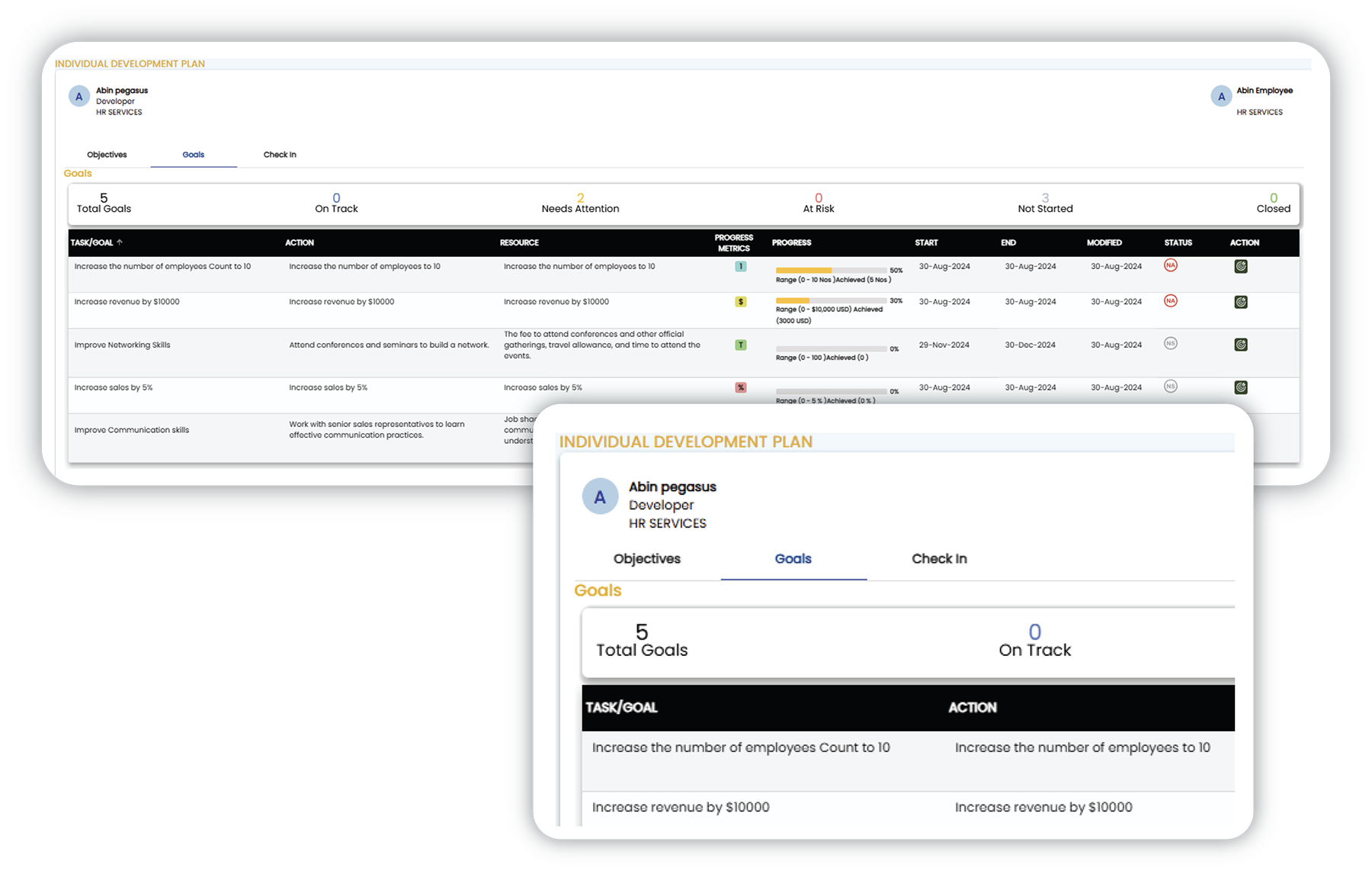
What is an Individual Development Plan?
An Individual Development Plan (IDP) is a powerful tool designed to help employees define their career goals and map out the steps necessary to achieve them. It’s not just a static document; an IDP is an evolving guide that highlights personal development, skill-building, and performance improvements.
For employees, it’s a tailored roadmap to enhance strengths, close skill gaps, and ultimately, achieve their full potential within the organization.
Benefits of an Individual Development Plan (IDP)
For Employees
- Career Path Clarity Employees know where they’re headed, which boosts motivation and engagement.
- Skill DevelopmentIDPs identify the skills needed for career advancement and provide opportunities for growth.
- Increased ConfidenceHaving a development plan gives employees a clear sense of control over their future, building confidence and autonomy.
- Manager-Employee ConnectionRegular discussions about IDP progress strengthen the relationship between employees and their leaders, enhancing communication and trust.
For Organizations
- Enhanced Employee RetentionEmployees who feel invested in are more likely to stay. By fostering growth and development, organizations can significantly reduce turnover.
- Increased ProductivityWell-developed employees are not only more efficient but also more innovative. An IDP ensures that employees are continually improving their skill sets, leading to better overall performance.
- Stronger Leadership PipelineIDPs are an essential part of succession planning. Organizations can groom internal talent for leadership roles, saving time and costs associated with external recruitment.
- Alignment with Organizational GoalsWhen employee development is aligned with organizational objectives, the result is a workforce that’s equipped to drive the company forward.
Track Performance Metrics in an IDP
Set Clear, Measurable Goals
Start by outlining SMART goals (Specific, Measurable, Achievable, Relevant, and Time-bound). These goals form the foundation for performance measurement.
Regular Check-ins
Schedule routine check-ins with managers to review progress, adjust goals, and provide feedback. This keeps development on track and allows for timely course correction.
Use Performance Data
Leverage metrics from 360-Degree Feedback, performance reviews, feedback loops, and even real-time data from ReviewCloud’s performance management tools.
Document Milestones
Maintain a record of goals achieved, training, and new skills acquired. This not only gives a sense of accomplishment but also ensures continuous growth is being documented.
Performance Improvement Plan (PIP)
A Performance Improvement Plan (PIP) is a structured, action-oriented strategy designed to help employees address and overcome performance challenges. A Performance Improvement Plan (PIP) isn’t just about fixing performance issues—it’s about fostering growth, enhancing skills, and creating a supportive environment for success. Leverage PIP metrics from performance reviews, feedback loops, and even real-time data from ReviewCloud’s performance management tools.
What is a Performance Improvement Plan (PIP)?
A PIP sets the stage for growth by outlining clear expectations and providing support to ensure the employee’s success. It’s essentially a roadmap that helps an employee get back on track by focusing on specific areas of improvement, with measurable goals and a defined timeline.
The goal of a PIP is to transform what could be a stressful experience into an opportunity for development, giving employees a fair chance to meet performance expectations while feeling supported throughout the process.
Benefits of a Performance Improvement Plan (PIP)
For Employees
- Clear Direction: A PIP eliminates uncertainty by providing concrete steps to improve. Employees know exactly what they need to work on and how to achieve it.
- Support for Success: It’s not just about pointing out problems—it’s about offering guidance, feedback, and support. This boosts the employee's confidence and gives them the resources they need to succeed.
- Professional Development: Through the improvement process, employees often pick up new skills, strengthen existing ones, and become more proficient in their role.
- Fair Opportunity: A PIP ensures that employees are given a structured and fair chance to address performance gaps before any drastic steps are taken.
For Organizations
- Improved Performance: When employees receive targeted coaching and support, their performance often improves significantly, enhancing the overall productivity of the team.
- Reduced Turnover: Replacing an employee can be costly and time-consuming. A PIP helps retain talent by giving underperforming employees a chance to improve, reducing turnover rates.
- Strengthened Manager-Employee Relationships: Regular communication and feedback during a PIP build trust between managers and employees, fostering a positive, collaborative work environment.
- Long-Term Success: By using PIPs, organizations ensure that employees are continually improving and aligning with company standards, resulting in a stronger, more capable workforce.
Create Measurable Objectives for a PIP
To be effective, the goals outlined in a PIP need to be clear and measurable. The best way to achieve this is by using the SMART framework, which ensures that objectives are well-defined and actionable:
- Specific: The objective must be clear and detailed. For example, instead of “improve communication,” try “respond to internal emails within 24 hours.”
- Measurable: Make sure there’s a way to track progress. If an employee is working on accuracy, the objective could be “achieve 95% accuracy in reports over the next quarter.”
- Achievable: The goal should be realistic. Aiming for something within the employee’s current capabilities, such as “complete a time management course by the end of the month,” ensures progress is possible.
- Relevant: The objective should be tied to the employee’s role and the company’s needs. For instance, “improve client response times to enhance customer satisfaction” keeps goals aligned with broader business objectives.
- Time-bound: Set a deadline to create urgency and accountability. "Increase project completion rate by 10% within the next 60 days" gives clear timing and expectations.
Track Performance Metrics in a PIP
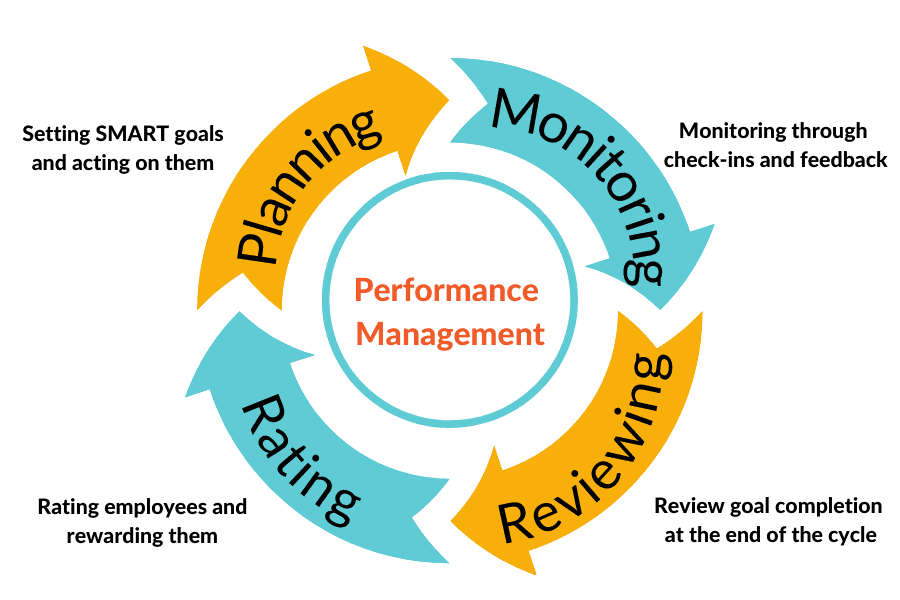
Regular Check-ins
Schedule weekly or bi-weekly check-ins with the employee to review progress. These conversations help identify what's working and address any hurdles quickly.
Data-Driven Tools
Use performance management tools such as 9-box reviews or key performance indicators (KPIs) to track objective data. This could include productivity metrics, quality of work, or customer feedback scores, depending on the area being measured.
360-Degree Feedback
Seek 360-Degree Feedback from colleagues, team members, or even clients to get a well-rounded view of the employee’s performance improvements.
Document Progress
Keep a detailed log of goals achieved, challenges faced, and feedback provided. This documentation ensures transparency and provides concrete evidence of progress.