

Rate the Job, Not the Person: Why Job Descriptions Matter
Job descriptions rarely get much love. They’re usually written quickly for a job post or new hire, then filed away and forgotten. Most sit in a shared drive collecting digital dust.
But here’s the irony: job descriptions are the foundation of almost every critical HR process, from pay equity to performance reviews to career pathing. If they’re broken, everything else you build on top of them wobbles.
The Hidden Problem with Job Descriptions
When companies don’t manage job descriptions well, HR leaders feel the pain every day:
- Compensation teams can’t demonstrate fairness or justify pay ranges without clear, comparable roles. Pay equity audits are increasing rapidly, with over 20 states now having transparency laws that require solid job data.
- Recruiters waste time with inconsistent postings. The average bad hire costs $15,000 per employee in re-hiring and retraining.
- Managers conduct performance reviews without a clear standard of what “good” looks like. Fifty-two percent of job seekers say the quality of a job description heavily influences whether they apply
- Employees don’t see a transparent career path. Only 29% of employees are reported to be “very satisfied” with advancement opportunities, which drives turnover.
It’s not that HR doesn’t care; it’s that job descriptions are treated as paperwork instead of a strategic asset.
Why Job Descriptions Power the Growth Flywheel
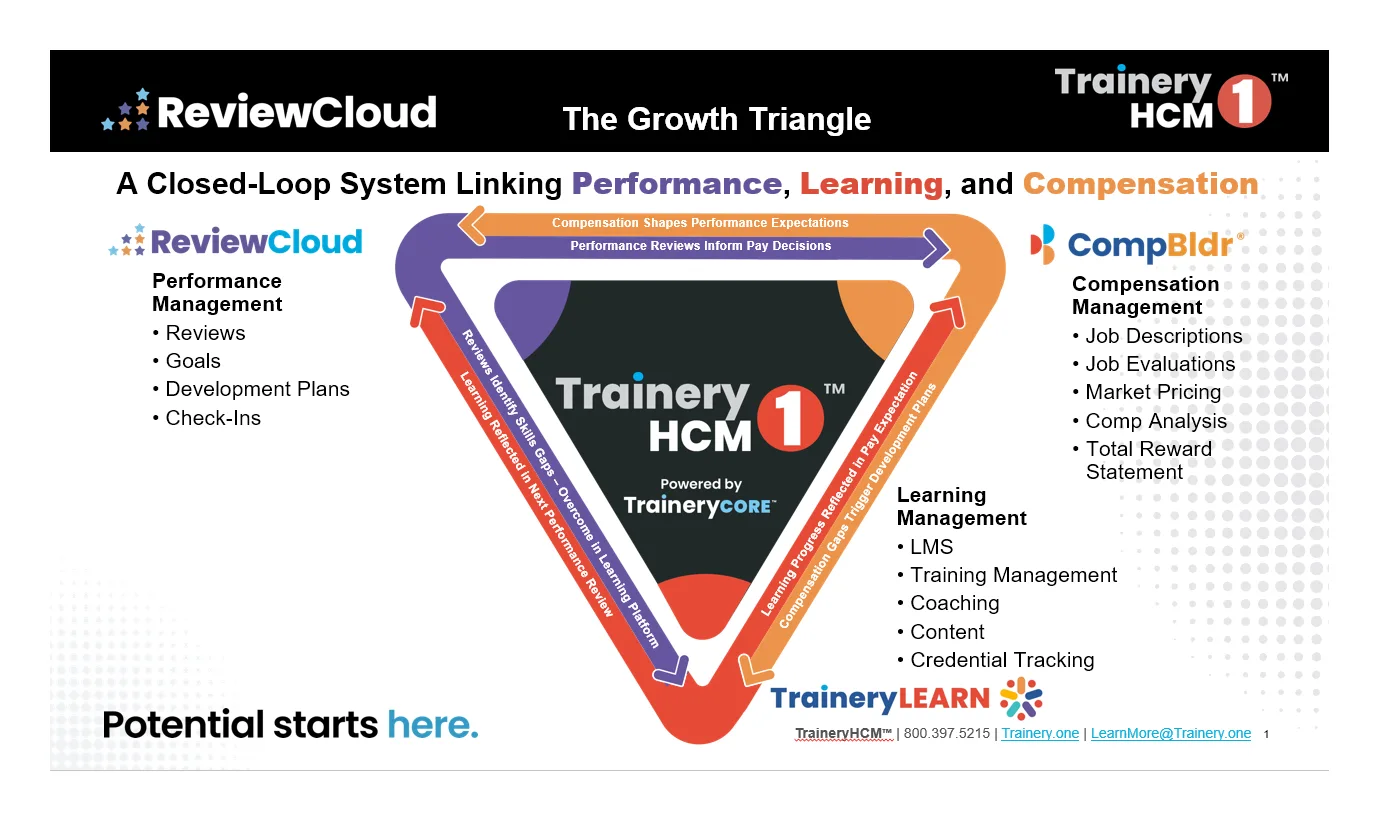
At TraineryHCM, we discuss the growth flywheel, where performance, learning, and compensation mutually reinforce each other. Job descriptions are the quiet force that keeps that flywheel spinning.
When employees experience fair and transparent human resource practices along with opportunities for growth, performance and retention rates improve. That’s the flywheel in motion.
By making job descriptions the data spine of HR strategy, you gain:
- Improved pay equity compliance and strengthened defensibility before regulators and employees.
- Transparent career frameworks that increase retention and morale.
- Trusted systemic performance management because processes and expectations are clearly defined.
In other words, getting job descriptions right is not busy work; it is the groundwork for a stronger, fairer workplace.
Where Technology Fits
Historically, managing job descriptions meant chasing Word documents, emailing templates, and arguing over the latest version.
Today, modern platforms, like JobBldr™, make it easier:
- AI tools can auto-generate or clean up descriptions.
- Version control and audit trails reduce legal risk.
- Side-by-side comparisons highlight internal inequities.
- Integration with compensation and performance systems keeps everything connected.
Technology doesn’t replace HR judgment; it minimizes administrative work and version overload, enabling leaders to concentrate on strategic growth, internal fairness, and transparency.
Rate the Job, Not the Person
At its heart, this is about trust. Employees trust their company when they believe jobs are evaluated fairly, pay is defensible, and career growth is transparent. That trust starts with a simple but powerful idea: rate the job, not the person.
Companies spend millions on compensation programs, performance tools, and training. But if the job foundation is broken, those investments don’t deliver.
The good news? Job descriptions are one of the simplest, highest-leverage places to start. Get them right, and you strengthen every part of your HR strategy.
Source(s): Salary.com reports
Further Reading:
Why Reviews, Learning, and Compensation Must Be Interconnected
GradeBldr™ and the JESAP™ Methodology